












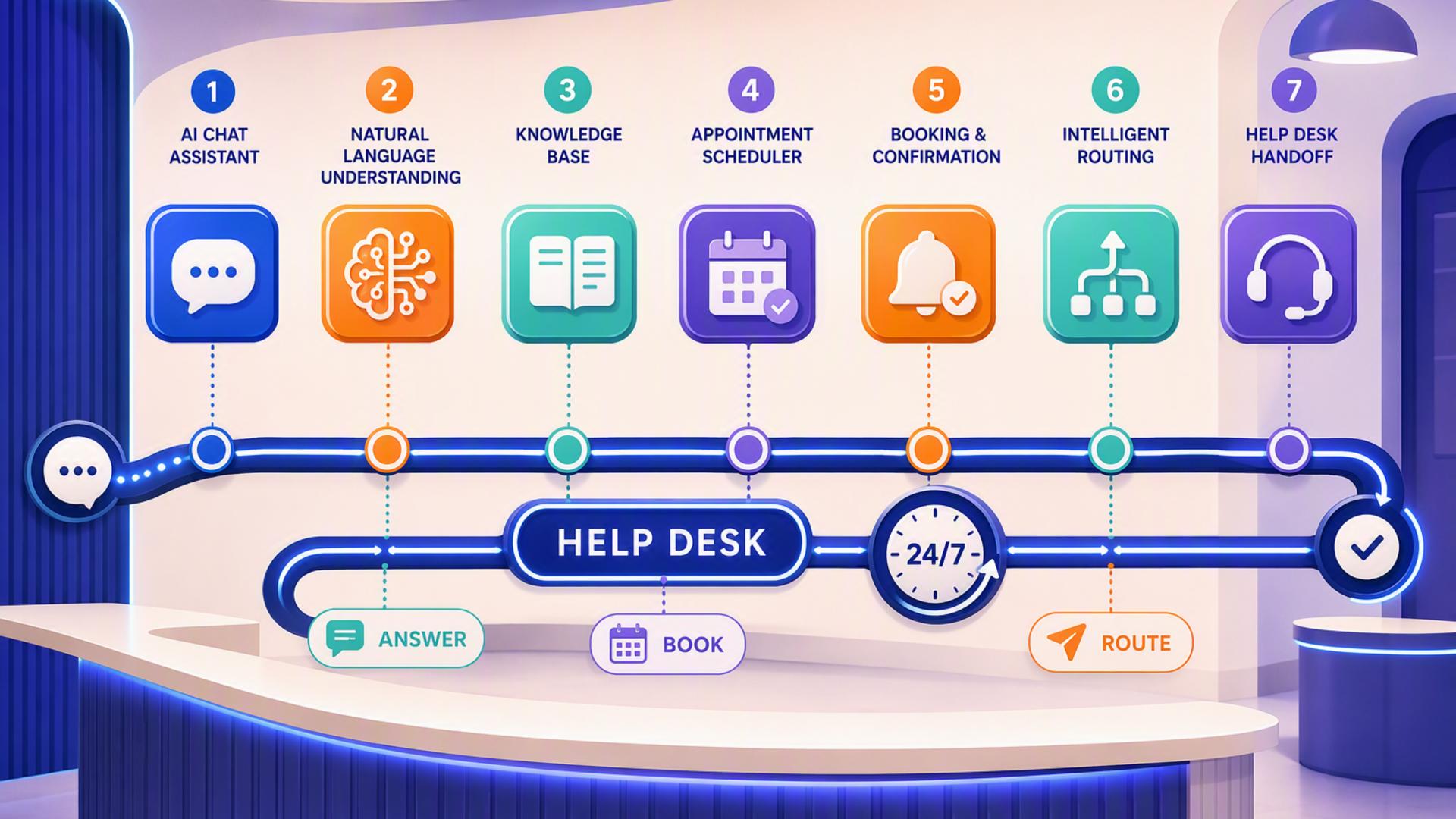
Creating a front desk that never sleeps is no longer reserved for large enterprises. With the rise of AI-powered communication tools, businesses of all sizes can now handle calls, book appointments, and manage customer interactions around the clock without missing a beat.
The key is not relying on a single platform, but combining the right set of tools that work together seamlessly. Below, we explore seven essential solutions that can help you build a reliable, always-on AI reception desk, starting with the one that naturally ties everything together.
DialMyCalls AI Receptionist stands out as the natural foundation of a 24/7 front desk. It is designed specifically to handle incoming calls intelligently, respond to common enquiries, and ensure that no opportunity is missed regardless of the time of day.
Its AI-driven system goes beyond simple call answering. It captures caller details, understands intent, and can guide conversations in a way that feels structured yet responsive. This makes it particularly effective for businesses that rely heavily on inbound communication.
What makes this solution especially compelling is how easily it connects with other tools. It can pass information directly into CRMs, trigger scheduling workflows, and ensure that every interaction leads to a meaningful next step.
Rather than acting as a standalone feature, it becomes the central hub of your reception desk. Calls are not just answered, they are converted into actionable data that supports sales, support, and operations.
For businesses aiming to build a dependable AI reception setup, this tool provides a clear starting point that integrates naturally with the rest of the stack.
Freshdesk offers a comprehensive ticketing system that helps organise customer queries once they move beyond the initial call. It transforms conversations into trackable tickets, allowing teams to prioritise and resolve issues efficiently.
This structured approach is particularly useful for businesses that receive a high volume of enquiries across multiple channels. It ensures that no request slips through the cracks.
Freshdesk includes automation features that can assign tickets, send follow-ups, and trigger responses based on predefined rules. This reduces manual workload while maintaining consistency in customer service.
When paired with an AI receptionist, it provides a natural next step after the call. The interaction becomes part of a broader support workflow, ensuring continuity from first contact to resolution.
Slack serves as the internal communication layer of a modern reception desk. It allows teams to receive updates, alerts, and notifications in real time, ensuring that important information is shared instantly.
For example, when a call requires human intervention, Slack can notify the right team member without delay.
Beyond messaging, Slack enables collaboration through channels, integrations, and shared workflows. Teams can discuss leads, coordinate responses, and manage tasks without switching platforms.
This makes it a valuable complement to AI-driven systems, ensuring that human input is always accessible when needed.
Both HubSpot and Salesforce act as the backbone of customer relationship management. They store and organise customer data, making it easy to track interactions and maintain a complete view of each contact.
When integrated with an AI receptionist, every call detail can be automatically logged, creating a seamless flow of information.
These platforms also support sales pipelines, automation, and reporting. They help businesses turn conversations into opportunities by ensuring timely follow-ups and consistent engagement.
While they require some setup, their ability to unify data across departments makes them a valuable part of a long-term reception strategy.
Google Calendar provides a straightforward way to manage appointments and availability. It ensures that bookings made through AI systems are accurately reflected in real time.
This reliability is essential for avoiding double bookings and maintaining a smooth customer experience.
With shared calendars, teams can easily coordinate schedules and stay aligned. This is particularly useful when multiple staff members are involved in handling appointments or consultations.
As part of a broader system, it acts as the scheduling backbone that keeps everything organised.
Zapier plays a critical role in linking different platforms together. It allows businesses to create automated workflows, known as triggers and actions, without needing custom development.
For instance, a completed call can automatically create a CRM entry, send a Slack notification, and update a calendar event.
Some common ways Zapier supports an AI reception desk include:
By handling these connections, Zapier ensures that each tool works as part of a unified system rather than in isolation.
Calendly and Acuity Scheduling specialise in making appointment booking simple and efficient. They allow customers to choose available time slots without back-and-forth communication.
When integrated with an AI receptionist, callers can be guided directly into booking a meeting during the interaction.
These tools also offer features such as automated reminders, time zone adjustments, and custom booking rules. This helps reduce no-shows and ensures a smooth scheduling process.
While focused on a specific function, they play an important role in converting enquiries into confirmed appointments.
Building a 24/7 AI reception desk is less about choosing a single tool and more about creating a system where each component supports the others. From handling calls to managing data and automating workflows, every platform contributes to a seamless customer experience.
A strong setup usually includes scheduling platforms, CRMs, team messaging tools like Slack, and automation solutions such as Zapier. Each one extends the functionality of the receptionist by ensuring that information flows smoothly into the next stage without manual effort.
In most cases, it is relatively straightforward. Many tools offer built-in integrations, and platforms like Zapier simplify the process with easy-to-use automation rules. Businesses often start with basic connections and expand gradually as they become more comfortable.
Generally, no. Most integrations are designed for non-technical users. Tools like Zapier and native integrations with platforms such as Calendly, HubSpot, or Slack allow businesses to connect systems without writing code.
The most effective approach is to connect the AI answering system directly to a CRM. This ensures that every call detail, including contact information and enquiry type, is recorded instantly. Adding a scheduling tool allows the system to book follow-up appointments in real time, turning conversations into actionable opportunities.

Except where otherwise noted, content on this site is licensed under a Creative Commons Attribution 3.0 License
UK Co. UK Charity Reg. No. · Registered Office: , London EC2V 7QJ, UK